
BlackCoat journal
By BlackCoat Services
4 min read
What affects the cost of 3D printing in the UK?
A practical guide to the information behind a 3D printing quote, from geometry and file readiness to quantity, finish and deadline.
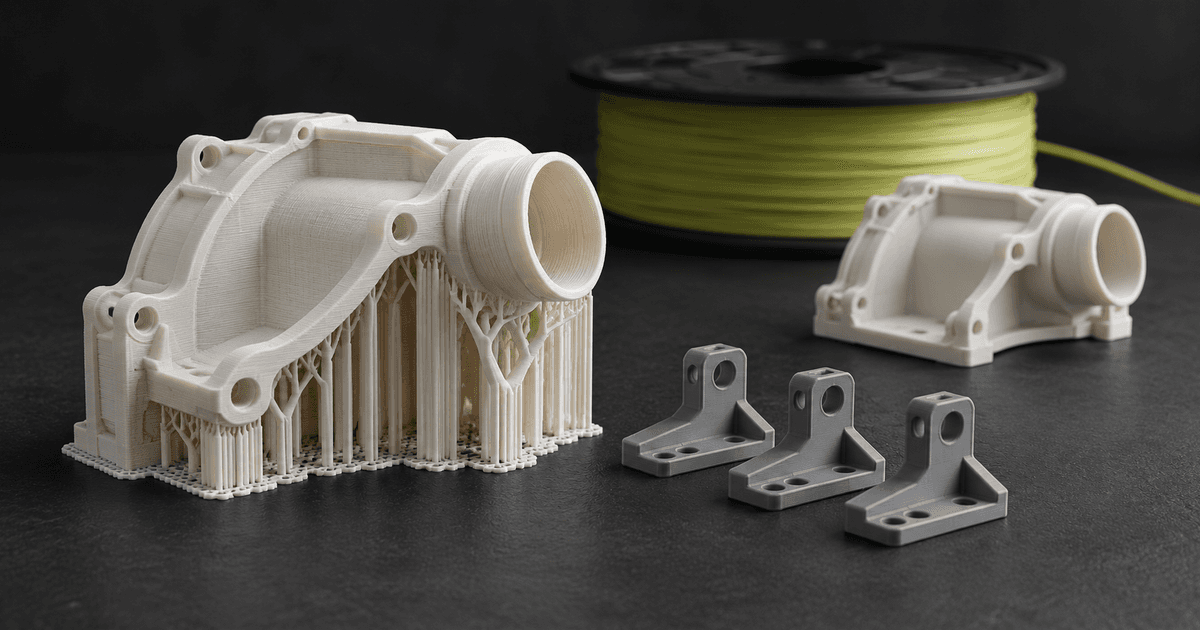
The cost of a 3D-printed part cannot be judged reliably from its overall dimensions alone. A useful quote considers what must be made, how it will be used and what work is needed before and after printing. Two parts that occupy a similar space can place very different demands on preparation, production and finishing.
A clear project brief lets a supplier review the geometry, select a production route and identify assumptions before quoting. Knowing what is included also makes quotes easier to compare.
Geometry and size
Overall size matters, but geometry determines much of the production approach. Thin features, enclosed spaces, overhangs, deep recesses and surfaces that must fit another component can affect orientation, support needs and post-processing. Sharing which features are functional helps the review focus on what matters rather than treating every surface in the same way.
Process and material requirements
FDM (fused deposition modelling) uses plastic filament, while resin printing forms layers from liquid resin using light. They suit different priorities. The intended use, handling, environment, level of detail and finish should guide the choice. Check whether a material or process fits the requirement, even if you have used it before.
Quantity, setup and repeat parts
A first order can include work that is not repeated unchanged on every later part: checking the file, agreeing orientation, confirming acceptance points and preparing production. Repeat supply may be more straightforward once a revision and production approach have been agreed, but quantity still affects scheduling, checking, packing and delivery. A changed file should be treated as a new revision rather than assumed to be identical.
Finish and post-processing
A part intended for a visual review may need different finishing from a hidden fit-check component. State what the finish needs to achieve: for example, whether support marks are acceptable, whether a face will be seen, or whether an interface must remain clear. Describing the purpose avoids asking for unnecessary work while making important expectations visible.
File readiness and design work
A production-ready file should represent the intended part and include enough context to review scale, interfaces and critical features. A mesh may need repair, while a sketch or existing component may require CAD development before it can be printed. Keep design work separate in the brief so it is clear whether the request is to manufacture an approved file or to help develop one.
Deadline and delivery
Timing affects how the work can be planned, so give the date the part is actually needed and explain what happens next. A review model for an internal meeting has a different dependency from a component needed before an assembly can be tested. The deadline should be agreed alongside file readiness, quantity, finish and delivery rather than considered in isolation.
How to compare quotes
Check that each quote covers the same revision, quantity, process assumptions, finishing, checking and delivery scope. If an item is unclear, ask what is included rather than comparing headline totals alone. When you use the quote route, provide the same complete brief to make the response more useful and reduce avoidable clarification.
Next steps