
BlackCoat journal
By BlackCoat Services
4 min read
FDM vs resin printing: which process suits your part?
Compare how FDM and resin printing work, where each can be useful and which questions to ask before selecting a process.
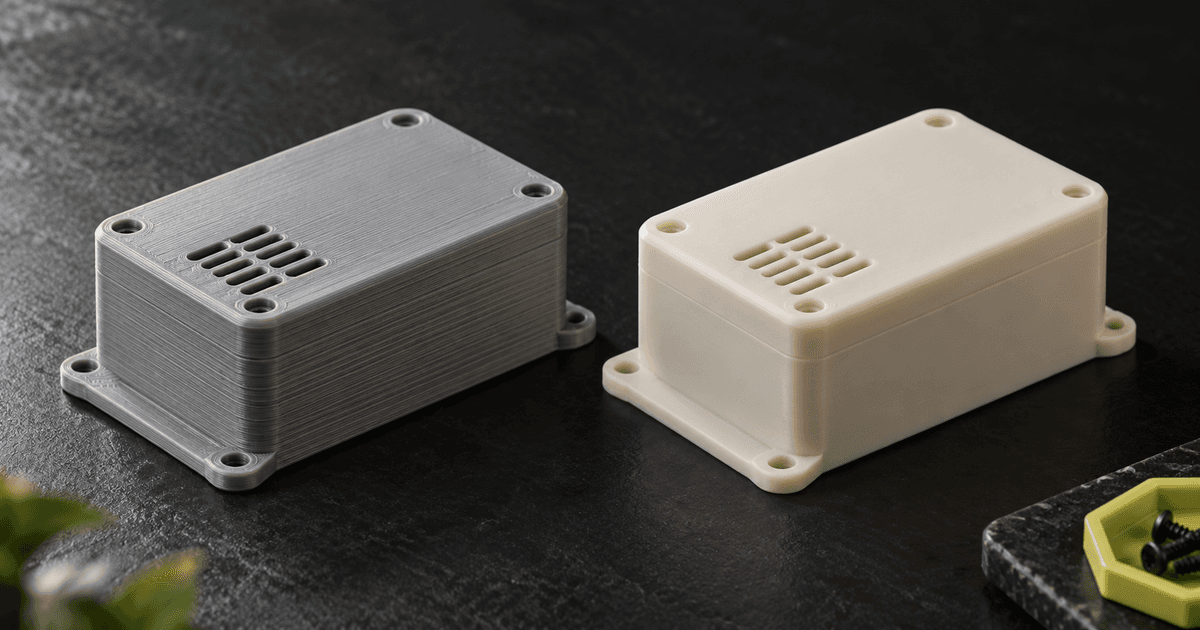
FDM and resin printing are both additive processes, but they form parts differently and bring different design and handling considerations. Neither is the automatic choice for every project. Selection should begin with what the part must do, what needs to be inspected and how it will be handled after delivery.
A process comparison is most useful when it is tied to a real requirement. A presentation model, a fit-check part, a working fixture and a small detailed component may place emphasis on different features. Start with the intended use, then review geometry, finish and practical constraints together.
How the processes build a part
FDM (fused deposition modelling) forms a part by placing softened plastic filament along planned paths, layer by layer. The path direction, layer direction and support strategy are part of the production decision. Resin printing forms layers from liquid resin using light, followed by cleaning and curing steps. Orientation and supports still matter, although the visible result and post-processing route differ.
Typical strengths, used in context
FDM is often considered for functional prototypes, fit checks, jigs, fixtures and working components. Resin is often considered where small features, detailed geometry or a presentation-focused surface carry more weight. These are useful starting points, not promises: a specific part can favour a different route once its geometry and use are reviewed.
Geometry and feature detail
Look beyond the smallest visible feature. Consider wall sections, unsupported areas, holes, recesses, mating faces and places where supports may be difficult to remove. Resin can be a useful candidate for fine visual detail, while FDM can suit many practical geometries. The correct choice depends on which features are critical and whether the design can be adjusted for production.
Surface finish and appearance
Layering can be visible with either process, although it appears differently. Orientation, geometry and finishing expectations influence the result. If appearance matters, identify the viewing faces and explain whether the part is for a concept discussion, photography, painting or direct workplace use. A broad request for a smooth finish is less useful than a description of the purpose.
Handling and intended environment
The part's loads, contact points, temperature exposure, cleaning, storage and frequency of handling should be included in the brief. Different processes and material families behave differently, and printed orientation can also be relevant. Do not infer suitability from appearance alone; discuss the working conditions before fixing the process.
Supports and post-processing
Both routes may require supports, and support contact can influence visible or functional areas. FDM parts may require support removal and agreed finishing. Resin parts require process-specific cleaning, curing and support removal. Ask which faces will carry support marks and whether post-processing could affect a critical edge or interface.
Design and file quality
A file that opens successfully is not necessarily ready for either process. Confirm scale, closed geometry, wall intent, clearances and revision status. If the design is still changing, CAD and prototyping support can help separate design questions from process questions and preserve the reason behind each revision.
Choose from requirements, not labels
Share the file and explain the requirement before fixing the process. A supplier can then review FDM and resin against the same priorities, identify questions and explain the proposed route. If neither process fits the brief as supplied, the review should establish that before production.
Next steps